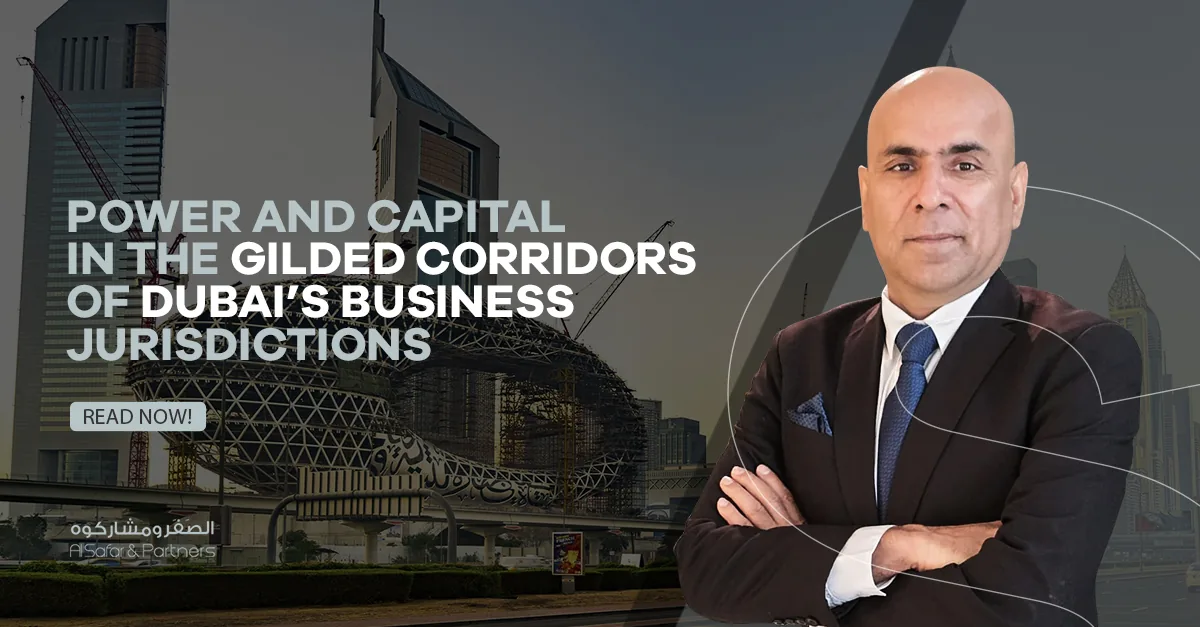
Dubai has meticulously cultivated an environment where ambition meets opportunity, transforming its skyline into a testament to engineering prowess and its regulatory landscape into a beacon of global commerce. Far from merely a regional player, Dubai has firmly established itself as a premier international business hub, strategically connecting capital flows and fostering innovation across the Middle East, Africa, and Asia. This remarkable ascent is underpinned by three distinct and highly sophisticated jurisdictional pillars: the Dubai International Financial Centre (DIFC), the Dubai Multi Commodities Centre (DMCC), and Mainland Dubai.
For any discerning entrepreneur or investor, the selection among these jurisdictions transcends mere administrative formality; it represents a strategic decision that profoundly influences a business’s regulatory framework, tax obligations, and operational scope. While all three offer the compelling advantages of 100% foreign ownership and streamlined setup processes, they are meticulously designed to cater to diverse commercial realities and strategic objectives.
Dubai’s Jurisdictional Architecture
Dubai International Financial Centre (DIFC)
Established in 2004, the DIFC stands as an independent financial free zone, operating with its own robust common law framework, distinct from the UAE’s civil law system. This unique legal autonomy, coupled with an independent court system, provides international firms with a level of legal predictability and certainty akin to leading global financial centers like London or Singapore. Financial entities within the DIFC are meticulously regulated by the Dubai Financial Services Authority (DFSA), ensuring adherence to the highest international standards, while non-regulated businesses engage with the efficient DIFC Registrar of Companies. The DIFC is the preferred choice for institutions seeking a world-class ecosystem for financial services, wealth management, and sophisticated legal structures.
Dubai Multi Commodities Centre (DMCC)
Nestled within the vibrant Jumeirah Lakes Towers, the DMCC has evolved into the world’s leading free zone for commodities trade and enterprise. Its strength lies in facilitating high-volume cross-border trade, encompassing traditional markets such as gold and diamonds, and pioneering new frontiers in digital assets through its innovative Crypto Centre. The DMCC is not merely a legal construct but a dynamic commercial platform, offering unparalleled connectivity and infrastructure for businesses focused on global trade and emerging technologies.
Mainland Dubai
Regulated by the Department of Economy and Tourism (DET), Mainland Dubai offers unparalleled and direct access to the expansive UAE domestic market. Significant reforms introduced in 2021 have revolutionized the landscape, allowing for 100% foreign ownership in the vast majority of commercial and industrial activities . This progressive shift has substantially narrowed the historical distinction between free zone and mainland operations, making Mainland Dubai an increasingly attractive option for businesses aiming for deep market penetration and engagement with government-linked opportunities. Furthermore, the recent Dubai Executive Council Resolution No. (11) of 2025 has further enhanced this accessibility, enabling Dubai free zone entities to expand their business activities into mainland Dubai with greater ease and flexibility.

Incorporation and Regulatory Sophistication
Establishing a presence across all three jurisdictions is characterized by efficiency, yet the depth and nature of regulatory oversight vary to align with their distinct purposes. In the DIFC, financial firms undergo a rigorous licensing process with the DFSA, including comprehensive “fit and proper” assessments, ensuring the highest standards of governance and compliance. Non-regulated entities benefit from a more streamlined process through the Registrar of Companies. While a physical presence is generally expected, flexible office solutions are available to accommodate diverse business models.
DMCC and Mainland Dubai have embraced digital transformation, with company formation processes often completable remotely. Mainland Dubai further offers an “Instant License” model for certain activities, reflecting a commitment to ease of doing business. However, it is crucial to note that this does not negate the need for full compliance with all regulatory requirements.
The nuances of professional services further highlight these distinctions. For instance, audit firms operating in Mainland Dubai require approval from the UAE Ministry of Economy, whereas in the DIFC, audit firms must be registered and are subject to additional oversight when servicing DFSA-regulated entities. Understanding these practical differences is paramount for seamless operations.
Wealth Structures and Legal Certainty
Dubai’s role as a global wealth management hub has expanded significantly, paralleling its corporate growth. The DIFC, with its common law framework and independent court system, has strategically positioned itself as a leading jurisdiction for the establishment of trusts and foundations. These sophisticated structures are increasingly favored by international families for robust succession planning and comprehensive asset protection strategies, offering a level of legal certainty and established practice that is highly valued globally.
While other jurisdictions within the UAE, such as the Abu Dhabi Global Market (ADGM), offer competing frameworks, the DIFC and ADGM currently provide the most mature and judicially tested environments for such wealth structures. Ongoing onshore legal developments continue to enhance the overall landscape for private wealth, further solidifying the UAE’s appeal.
A Modern Framework of Tax, Audit, and Compliance
The introduction of UAE Corporate Tax in 2023 marked a pivotal moment, ushering in a sophisticated and internationally aligned tax regime. The standard corporate tax rate is a highly competitive 9% on taxable income exceeding AED 375,000, administered by the Federal Tax Authority.
Entities operating within Free Zones, including the DIFC and DMCC, may benefit from a 0% corporate tax rate on “Qualifying Income,” provided they meet the criteria for “Qualifying Free Zone Person” (QFZP) status. This status requires adherence to specific conditions, including maintaining adequate economic substance in the UAE, earning qualifying income, and complying with transfer pricing rules [4]. The transition from a zero-tax model to a rules-based system ensures compliance with international standards and reduces reputational risk for investors.

Note: Mainland Dubai follows the standard UAE corporate tax framework, which is highly competitive globally at 9% for profits exceeding AED 375,000. DIFC and DMCC businesses can maintain a 0% corporate tax rate provided they meet the criteria of a “Qualifying Free Zone Person” and their income is classified as “Qualifying Income.” For free zone companies, any income derived from transactions with mainland UAE (outside of specific “Qualifying Activities”) is typically taxed at the standard 9% rate.
Audit requirements have also tightened, reflecting a commitment to transparency and accountability. Companies in the DIFC are generally required to file audited financial statements within prescribed timelines, and the DMCC has similarly strengthened its enforcement of audited accounts. Concurrently, the UAE is advancing towards a digital tax environment, with an e-invoicing framework under development that will further streamline accounting and reporting practices across all jurisdictions.
A Mature and Strategic Ecosystem
Dubai is no longer merely a zero-tax jurisdiction; it has evolved into a highly sophisticated, compliant, and tax-efficient platform aligned with international standards, including OECD frameworks. This strategic shift is crucial, as it significantly mitigates reputational risk for investors and seamlessly integrates the system with global capital flows.
The choice of jurisdiction is a strategic imperative. The DIFC offers unparalleled legal certainty and a financial ecosystem tailored for institutions and complex structures. The DMCC provides unmatched scale and efficiency for global trade and asset movement. Mainland Dubai grants direct access to the robust domestic economy and government-linked opportunities, now further enhanced by the ability of free zone entities to expand their operations onshore.
This decision is not merely cosmetic; it fundamentally determines how a business operates, how it is taxed, and how disputes are resolved. Registration is only the entry point. The true strategic question is where the business intends to position itself within Dubai’s dynamic legal and economic ecosystem to maximize its potential for growth and success.
For more information and legal consultation reach out to Al Safar and Partners Law Firm at +971 52 758 3267 - reception@alsafarpartners.com or visit https://www.alsafarpartners.com.
Written by: Mr. Niaz Brohi - Partner and Case Manager at Al Safar and Partners Law Firm.